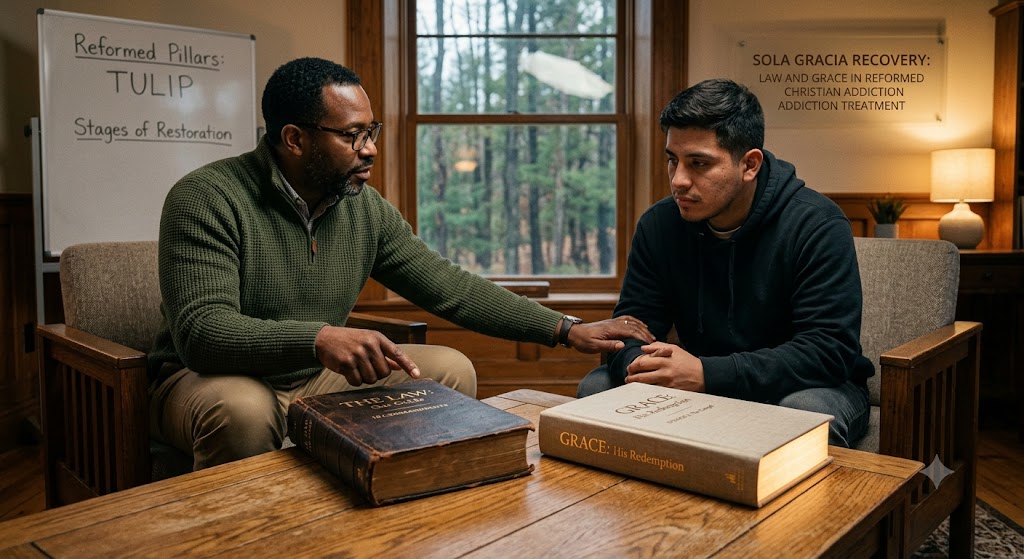
Addiction can leave individuals feeling trapped in a cycle of substance use, emotional pain, and spiritual discouragement. For many Christians, the burden extends beyond physical dependence to include guilt, shame, and the fear that they have fallen too far from God’s grace. A Reformed Christian perspective offers a hopeful and balanced approach to addiction recovery by showing how law and grace work together to promote lasting freedom. Rather than viewing these biblical truths as opposites, this perspective recognizes that both play essential roles in healing the mind, body, and spirit.
Addiction Recovery Requires a Whole-Person Approach
Addiction affects more than physical health
Substance use disorders impact nearly every area of life. In addition to physical dependence, addiction can contribute to anxiety, depression, trauma, damaged relationships, financial stress, and a loss of purpose. Many individuals also struggle with feelings of isolation and hopelessness that make recovery even more difficult.
At DrBrooker.net, recovery is approached with the understanding that every person has unique needs. Comprehensive addiction recovery services, mental health treatment, inpatient care, outpatient programs, and individualized support work together to help clients build a healthier and more fulfilling future.
Faith can strengthen the recovery journey
For individuals who desire a Christian foundation for healing, faith provides more than comfort. It offers identity, purpose, and hope during difficult seasons. A biblical understanding of law and grace can reshape how people view both their addiction and their ability to recover.
The Purpose of Law in Christian Recovery
Law reveals truth
In Reformed theology, God’s law serves as a guide that reveals truth about human behavior. In addiction recovery, truth is essential because it helps individuals honestly acknowledge the impact addiction has had on their lives.
Without honesty, lasting recovery becomes difficult. Many people spend years minimizing substance use or hiding its consequences. Accepting the truth allows healing to begin.
Accountability promotes healthy change
Recovery requires structure. Whether someone enters inpatient treatment or participates in outpatient care, accountability helps establish routines that encourage stability and personal growth.
Professional treatment programs provide guidance through counseling, recovery planning, educational resources, and therapeutic support. These tools help individuals replace destructive habits with healthier behaviors that support long-term sobriety.
The Transforming Power of Grace
Grace replaces shame with hope
While the law reveals the need for change, grace provides the confidence to pursue it. Many Christians struggling with addiction believe they are beyond forgiveness because of repeated mistakes or relapse.
Grace reminds individuals that addiction does not define their identity. Every person has value, and every recovery journey can begin with hope rather than condemnation.
Understanding this truth often becomes a turning point. When shame begins to lose its power, individuals become more willing to seek help, participate in treatment, and remain committed to recovery.
Grace encourages perseverance
Recovery is rarely perfect. There may be setbacks, emotional struggles, or unexpected challenges along the way.
Grace provides encouragement during these difficult moments. Instead of allowing setbacks to become permanent failures, individuals learn to continue moving forward with renewed determination and faith.
How Law and Grace Work Together
Truth and compassion create balance
Some people mistakenly believe that accountability and compassion cannot exist together. In reality, effective addiction treatment requires both.
Law provides direction, honesty, and responsibility. Grace provides forgiveness, encouragement, and emotional healing. Together, they create an environment where individuals can acknowledge difficult truths while remaining hopeful about their future.
This balanced approach promotes meaningful transformation rather than temporary behavioral change.
Recovery grows through consistency
Lasting freedom is rarely achieved overnight. Recovery involves daily choices, ongoing support, and continuous personal growth.
By combining biblical principles with evidence-based addiction treatment, individuals develop healthier coping skills, stronger relationships, improved emotional regulation, and greater resilience.
Holistic Care Supports Lasting Freedom
Treating addiction and mental health together
Many individuals seeking addiction treatment also experience co-occurring mental health conditions such as depression, anxiety, trauma, or chronic stress.
Integrated treatment addresses these concerns simultaneously through counseling, therapy, behavioral health services, and spiritual support. Treating both addiction and mental health increases the likelihood of long-term recovery.
Individualized treatment respects every journey
No two recovery experiences are alike. Some individuals require the structure of inpatient care, while others benefit from outpatient treatment that allows them to continue meeting family and work responsibilities.
Individualized treatment plans ensure each person receives care that reflects their unique challenges, strengths, recovery goals, and spiritual values.
Building a Life of Freedom and Purpose
True freedom extends beyond abstaining from drugs or alcohol. It includes emotional stability, healthier relationships, renewed faith, and a restored sense of purpose.
As individuals grow through treatment, they begin replacing destructive habits with healthy routines that support lifelong recovery. They also discover that healing is not simply about avoiding relapse but about embracing a meaningful life built on truth, grace, and hope.
Conclusion
A Reformed Christian perspective reminds us that law and grace are not opposing forces in addiction recovery. Law provides truth, accountability, and direction. Grace offers forgiveness, compassion, and the hope necessary to continue moving forward. Together, they create a powerful foundation for lasting freedom.
If you or someone you love is struggling with addiction, you do not have to face the journey alone. Professional, faith-based addiction treatment that combines holistic care, mental health support, and individualized recovery planning can help you take the first step toward healing. Lasting freedom is possible, and hope begins with reaching out for help today.